
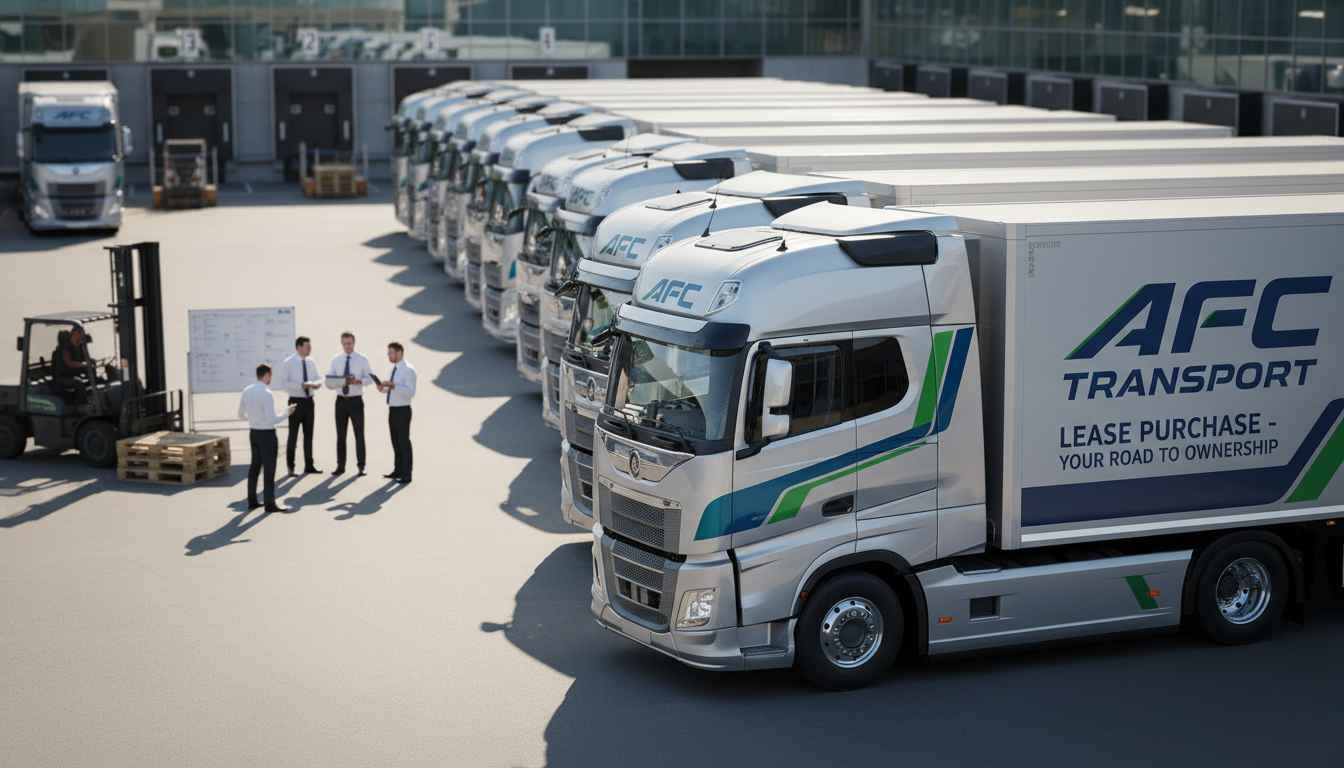
The subtle hum of a diesel engine in the early morning air, mingling with the faint aroma of fresh asphalt, sets the stage for a transportation decision that shapes businesses for years. For fleet managers and transport operators across Europe, the choice of how to acquire vehicles – whether through purchase, lease, or a hybrid solution – carries significant operational and financial implications. AFC transport lease purchase emerges as a compelling option, bridging flexibility and ownership in ways that traditional financing often cannot.
AFC, or Asset Finance Contract, offers businesses the opportunity to combine the benefits of leasing with the eventual acquisition of the vehicle. Unlike standard leases, which require return at the end of the term, AFC transport lease purchase agreements allow operators to plan for future ownership while mitigating upfront financial strain. This approach aligns particularly well with companies seeking to maintain cash flow, optimize tax positions, and manage fleet renewal cycles efficiently.
In practice, AFC transport lease purchase operates by establishing a fixed-term lease, where monthly payments cover depreciation, interest, and usage costs. At the conclusion of the lease, the lessee has the option to purchase the vehicle at a predetermined residual value. This structure offers predictability for budgeting and ensures that businesses can retain vehicles that have been fully integrated into their operations. European transport providers often find this dual benefit attractive, particularly in sectors requiring heavy-duty vehicles such as Dodge and Ram trucks, which are renowned for their durability and performance.
Choosing AFC transport lease purchase also has implications for fleet management strategies. Operators can align lease terms with operational cycles, ensuring that vehicles remain efficient and technologically up-to-date. This is particularly relevant in the context of commercial transport, where unexpected maintenance costs can disrupt logistics and impact service reliability. By locking in predictable costs and retaining the option to purchase, companies reduce exposure to market volatility and residual value risk.
Tax efficiency is another consideration. In many European jurisdictions, lease payments can be treated as operational expenses, allowing for favorable tax treatment compared to outright purchases. Additionally, once the purchase option is exercised, companies gain depreciation benefits and asset ownership, which can be strategically advantageous for long-term accounting purposes. This layered financial approach allows for sophisticated planning, balancing short-term liquidity with long-term asset management.
Operational flexibility extends beyond the financial dimension. AFC transport lease purchase agreements can include provisions for vehicle customization, maintenance packages, and usage adjustments. For businesses relying on heavy-duty trucks like Dodge and Ram, this means fleets can be tailored to specific operational requirements without incurring prohibitive upfront costs. Moreover, the availability of specialist European importers and dealer networks ensures that vehicles meet local regulatory standards while maintaining manufacturer support and warranty coverage. For more information on available vehicles and dealer support, visit AGT EUROPE.
Case Study: Implementing AFC Transport Lease Purchase in a Mid-Sized Logistics Company
Consider a mid-sized logistics firm operating across Western Europe. Facing an aging fleet and increasing delivery demands, the company explored AFC transport lease purchase to modernize operations. By structuring a three-year lease with a purchase option, the company reduced initial capital expenditure by 40% compared to outright purchase. Monthly payments were predictable, covering vehicle depreciation and interest, while maintenance was integrated into the contract.
At the end of the lease term, the company exercised the purchase option for vehicles that had proven reliable, effectively converting them into owned assets. Simultaneously, underperforming vehicles were replaced through new AFC lease agreements, creating a continuous cycle of fleet renewal without financial shock. Operational efficiency improved, downtime decreased, and the company reported a measurable improvement in cash flow and asset utilization.
Potential Drawbacks and Who Should Avoid This
While AFC transport lease purchase offers multiple advantages, it is not universally suitable. Businesses with limited or highly unpredictable cash flow may struggle with monthly lease commitments. Companies anticipating rapid downsizing or operational contraction should consider the potential financial commitment if the purchase option is exercised. Additionally, organizations seeking to retain maximum flexibility to swap vehicles frequently may find outright leasing more advantageous than a lease-to-purchase model. Awareness of residual values is crucial, as overestimation can lead to unfavorable purchase terms at the end of the lease.
Key Benefits Summarized
AFC transport lease purchase allows fleet operators to combine operational flexibility with long-term ownership. It reduces upfront capital requirements, stabilizes monthly budgeting, and provides potential tax advantages. Furthermore, it supports strategic fleet planning, aligning acquisition cycles with business growth and operational demand. By leveraging this model, transport companies can maintain modern, efficient fleets while controlling costs and preserving cash flow.
FAQ
What is the difference between AFC transport lease purchase and a standard lease?
A standard lease requires returning the vehicle at the end of the term, while an AFC transport lease purchase allows you to acquire the vehicle at a predetermined price, providing an option for ownership.
Can I customize vehicles under an AFC lease?
Yes, many AFC agreements allow for customization and maintenance packages, enabling businesses to adapt vehicles to operational needs without large upfront costs.
How does AFC transport lease purchase affect taxes?
Lease payments may be treated as operational expenses for tax purposes, and once the purchase option is exercised, depreciation benefits apply, optimizing tax efficiency.
Who benefits most from AFC transport lease purchase?
Mid-to-large logistics companies with predictable cash flow, long-term operational planning, and a desire to maintain a reliable fleet benefit most from this approach.
Are there risks in AFC transport lease purchase?
Risks include potential overestimation of residual values, monthly payment obligations, and reduced flexibility compared to short-term leases. Careful planning and consultation with financial advisors are recommended.
