
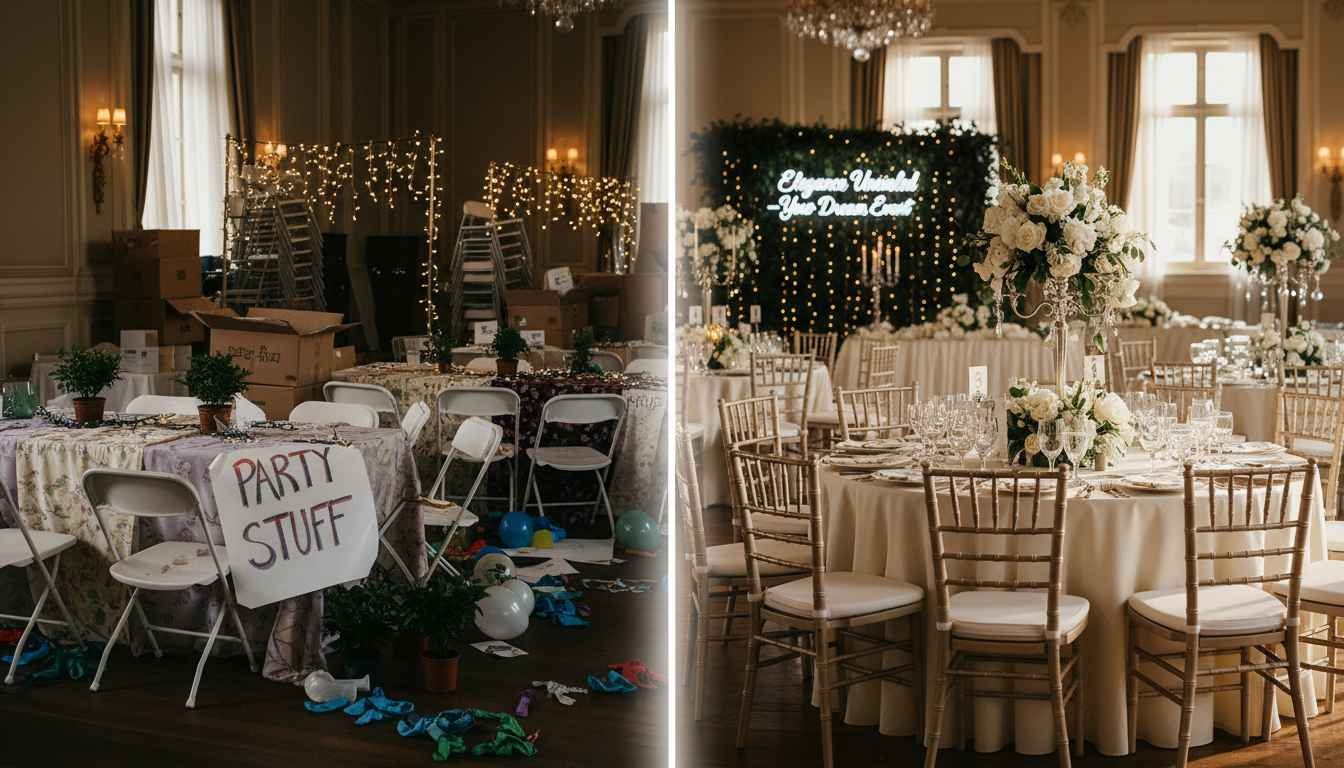
Most people are wrong about event planning. They think it’s a simple checklist of decorations, catering, and a few logistical details. The truth is, without a full service event planning package, what seems effortless often collapses into chaos, missed deadlines, and budget blowouts. Event planning is an art that requires foresight, experience, and a system that integrates every moving piece before it becomes a problem.
Before: Fragmented Planning
In the traditional model, event organizers juggle multiple vendors, timelines, and communication channels. One minute you’re coordinating catering, the next you’re chasing a florist who forgot your setup instructions. This disjointed approach often results in last-minute emergencies and compromises in quality. Budget overruns are common, and the stress can be overwhelming, leading to burnout before the event even begins.
After: Streamlined Coordination
With a full service event planning package, every element of the event is centralized. From initial concept to execution, planners oversee vendors, manage timelines, and align the event vision with practical logistics. This means no more missed deadlines or forgotten details. Attendees experience a cohesive, polished event while organizers enjoy confidence knowing every aspect is professionally managed. Tools like Eventeny provide platforms that centralize ticketing, vendor management, and scheduling, creating an ecosystem where nothing falls through the cracks.
Before: Budget Chaos
Budgeting for events is notoriously tricky. Without integrated planning, costs spiral unpredictably. Hidden fees, unanticipated charges, and duplicated services drain resources. Often, organizers underestimate the financial impact of last-minute changes, leading to overspending and compromises on essential elements like AV production or guest experience.
After: Transparent Financial Management
A full service package transforms budgeting from a guessing game into a clear roadmap. Every vendor cost, labor fee, and contingency is accounted for upfront. This allows organizers to allocate resources strategically and maintain control over expenditures. With predictive tools and reporting, surprises are minimized, and every dollar contributes to delivering the intended experience without compromise.
Before: Stress-Induced Oversights
Planning events manually often leads to mental overload. Coordinating multiple schedules, handling inquiries, and troubleshooting issues simultaneously is mentally exhausting. Oversights are inevitable, from miscommunication with vendors to missed deadlines for permits and licenses. The outcome is often an event that doesn’t fully meet expectations.
After: Delegated Expertise
Full service event planners absorb the stress by providing expert oversight. They anticipate issues before they arise, allowing organizers to focus on strategy, marketing, and guest experience. Delegation ensures that every technical detail, from seating charts to lighting cues, is executed flawlessly. The mental bandwidth previously consumed by micromanagement is now freed to enhance creativity and engagement.
Before: Limited Experience and Creativity
Events planned without professional guidance often lack innovation. Organizers tend to repeat familiar concepts, missing opportunities for unique experiences that captivate audiences. The lack of professional insight limits thematic creativity, technical execution, and experiential elements like immersive decor or interactive sessions.
After: Elevated Event Design
Full service packages provide access to seasoned designers, technical teams, and creative strategists. Each element is carefully curated to enhance attendee engagement and deliver memorable experiences. From interactive installations to custom lighting design, professional guidance elevates the event beyond standard expectations, creating a signature atmosphere that resonates long after the event concludes.
Before: Vendor Misalignment
Hiring multiple vendors independently often results in misaligned objectives. A catering team may not coordinate with the audio-visual team, or a decorator may conflict with the venue’s logistical requirements. These misalignments create friction, inefficiency, and sometimes outright cancellations.
After: Cohesive Vendor Management
Full service planners act as the central point of coordination. Vendors receive clear timelines, deliverables, and communication channels. Alignment ensures smooth collaboration, reduces errors, and enhances the overall quality of service. The event feels seamless because the orchestration behind it is precise, professional, and proactive.
Before: Crisis Response Only
In traditional planning, most organizers react to crises rather than prevent them. Technical glitches, scheduling conflicts, and guest mismanagement often require last-minute firefighting. This reactive approach increases stress, compromises quality, and may damage the event’s reputation.
After: Proactive Troubleshooting
Professional packages emphasize risk management. Anticipating potential problems is part of the workflow, not an afterthought. A preemptive approach reduces emergencies and ensures contingency plans are in place for weather, technical failures, or unexpected guest changes.
Troubleshooting Table
| Problem | Solution |
|---|---|
| Missed vendor deadlines | Centralized project management with automated reminders |
| Budget overruns | Detailed financial tracking and predictive reporting |
| Overlapping event schedules | Integrated timeline and resource allocation planning |
| Technical malfunctions | Pre-event testing and contingency planning |
| Guest dissatisfaction | Customized experience design with continuous feedback loops |
Potential Drawbacks
Despite its advantages, full service packages are not universal solutions. Smaller, budget-conscious events may find the cost prohibitive. Additionally, highly personal or niche gatherings may require more hands-on involvement than the packaged approach allows. Understanding the scale, complexity, and creative requirements of an event is essential before committing to a full service model.
Conclusion
Shifting from fragmented, reactive planning to a full service event planning package transforms events from stressful, unpredictable experiences into well-orchestrated, memorable successes. By centralizing management, ensuring financial transparency, and leveraging expert creativity, organizers not only reduce stress but elevate the quality of every detail. The difference between before and after is striking: what was once chaotic and error-prone becomes precise, professional, and unforgettable. Whether hosting a festival, corporate gathering, or private celebration, embracing a full service approach is the fastest route from confusion to excellence.
