
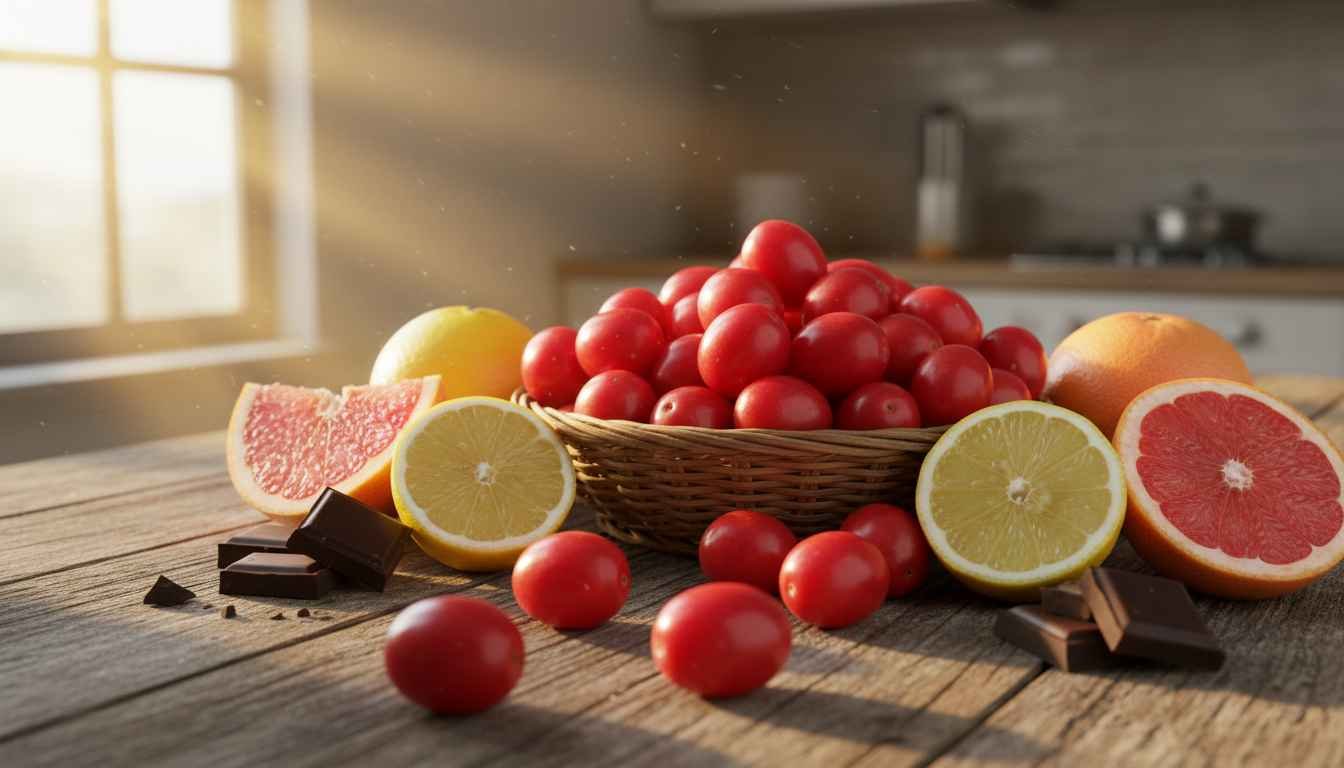
I wish I knew this 10 years ago. The first time I experienced the effect of miracle fruit, my palate underwent a transformation that challenged everything I thought I understood about flavor. This small, unassuming berry from West Africa has the unique ability to temporarily alter taste perception, turning sour and bitter foods into unexpectedly sweet sensations. For a chocolatier like myself at Cacao & Cardamom Chocolatier, understanding and experimenting with miracle fruit is not just a novelty – it’s a masterclass in flavor engineering.
Miracle fruit contains a glycoprotein called miraculin, which binds to the taste buds on your tongue. Under acidic conditions, it activates sweetness receptors, meaning lemons taste like candy, limes like soft oranges, and even vinegar can be palatably sweet. It’s an effect that typically lasts 30 minutes to two hours, creating a window of culinary opportunity for adventurous chefs and home cooks alike.
How Miracle Fruit Changes the Culinary Landscape
The magic of miracle fruit lies not just in novelty but in its potential to redefine ingredient use. Traditional sweeteners – sugar, honey, syrups – come with calorie concerns and sometimes overwhelm subtle flavors. Miracle fruit, however, lets acidity shine while delivering perceived sweetness. This allows foods like dark chocolate, tart berries, and citrus fruits to balance naturally without additional sugar.
From a professional standpoint, this is where the real artistry begins. At Cacao & Cardamom, we often experiment with pairing our premium dark chocolate dragees with tart components, knowing the miracle fruit effect will amplify the sweetness without masking the cocoa’s complexity. This is an advanced technique aligned with sensory science principles described by the International Food Information Council, which highlights taste modifiers as tools for both health and gastronomy.
Top Miracle Fruit Foods to Try
Not every food benefits equally. Some pairings are transformative, while others fall flat or create discordant flavors. Here’s a breakdown of the most impactful foods to try:
1. Citrus Fruits
Lemons, limes, grapefruits – normally intensely sour – become mellow, candy-like experiences. This is perfect for tasting sessions where you want to experience extreme contrast without overwhelming your palate.
2. Vinegar and Fermented Foods
Apple cider vinegar, balsamic, and even kimchi can taste unexpectedly sweet. This opens doors to creative gastronomy, allowing chefs to reduce sugar in dressings, marinades, and sauces without losing flavor complexity.
3. Berries and Tart Fruits
Blueberries, cranberries, and sour cherries suddenly shift from tart to luscious. This can enhance desserts, yogurts, or chocolate pairings, offering a natural sweetness without relying on processed sugars.
4. Dark Chocolate
High-cacao chocolate, which can be bitter to the casual taster, becomes silky and mellow under the influence of miracle fruit. This allows chocolate purists to enjoy the depth of cocoa with a newfound smooth sweetness.
5. Tomatoes and Other Acidic Vegetables
Cherry tomatoes, bell peppers, and even certain pickles taste unexpectedly sweet, making them candidates for fresh, vibrant salads and unconventional desserts.
Decision Matrix for Miracle Fruit Pairings
| If You Try | Then Expect |
|---|---|
| Lemon or lime | Candy-like sweetness without additional sugar |
| Dark chocolate 70% or higher | Bitterness softens, chocolate notes become velvety |
| Apple cider vinegar | Sourness diminishes, ideal for dressings or cocktails |
| Tart berries | Natural sweetness emerges, enhances desserts |
| Acidic vegetables like tomatoes | Fresh sweetness highlights, can be used in raw dishes |
Potential Drawbacks and Who Should Avoid This
While miracle fruit is generally safe, it is not for everyone. People with diabetes or on blood sugar medications should exercise caution, as the perception of sweetness can lead to overconsumption of acidic foods without appropriate dietary adjustments. Those with allergies to berries or other fruits in the same botanical family may experience mild reactions. Finally, the taste-altering effect, while fascinating, can be disorienting for some, particularly children or those sensitive to sudden flavor shifts.
Practical Tips for Maximizing the Experience
1. Consume fresh miracle fruit or high-quality freeze-dried tablets. Avoid synthetic flavor products marketed as “miracle flavor enhancers,” which often do not contain active miraculin.
2. Prepare foods in small portions. Taste perception is intense, and larger servings can become overwhelming.
3. Pair with high-quality ingredients. For chocolate or fruit pairings, the better the base product, the more profound the taste transformation. This aligns with professional tastings at gourmet chocolatiers like Cacao & Cardamom Chocolatier, where quality ingredients amplify the miracle fruit experience.
The Future of Miracle Fruit in Culinary Innovation
Chefs, mixologists, and even home cooks are beginning to explore miracle fruit for its ability to reduce sugar while creating unique flavor profiles. From dessert flights to interactive tasting experiences, the berry offers a laboratory for the palate. Beyond novelty, it represents a tool for healthier sweetening options and advanced culinary design, making it a fascinating ingredient for anyone serious about taste innovation.
In conclusion, miracle fruit is more than a gimmick. It’s a potent reminder that flavor is subjective, mutable, and capable of transformation in the right hands. Whether you are a chocolatier experimenting with cocoa depth or a home cook seeking a new culinary thrill, incorporating miracle fruit can fundamentally shift how you perceive taste. The small berry challenges your assumptions, offering a masterclass in both science and art of flavor.
